Why Looking Farther Ahead Makes You a Better Driver
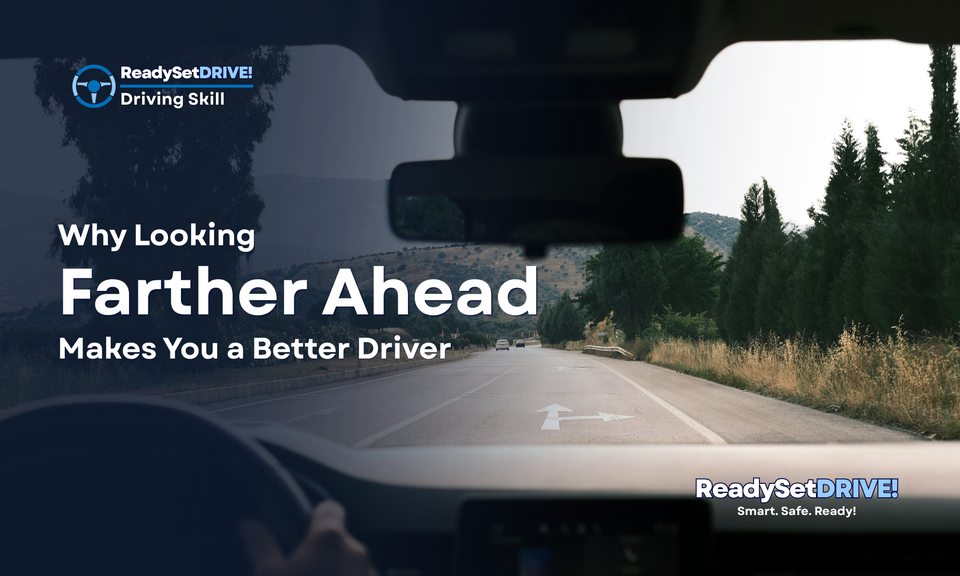
One of the most common things I see with new drivers is that they look too close to the front of the car.
And it makes sense. New drivers are thinking about the steering wheel, the pedals, staying in their lane, and everything else they're trying to remember. A lot of their attention is focused on controlling the car, so their eyes naturally stay closer to what's right in front of them.
But learning to look farther ahead is one of the most important skills in driving.
Good drivers are always trying to see what's coming next. They're looking down the road, reading the situation, and thinking about what they may need to do before they get there. The sooner you see something developing, the more time you have to decide what to do and make an adjustment if you need to.
That's also why distracted driving is so dangerous. When your eyes or attention leave the road, you're missing what's happening ahead. You can't prepare for something you don't see coming.
This is hard for new drivers. It's also one of the reasons having an experienced driver in the passenger seat is so important. Experienced drivers are good at seeing what's down the road. They can recognize what's coming and help the new driver begin learning to do the same.
Looking Farther Ahead Helps You Stay Centered
One of the biggest reasons new drivers struggle to stay centered in their lane is where they're looking.
When you look down at the road directly in front of the car, it feels like the road is coming at you quickly. New drivers start trying to steer around everything they see, which leads to constant corrections—left, right, left, right—and too much movement within the lane.
Oncoming traffic can create another problem. For a new driver, seeing a car coming toward them with only a painted yellow line separating the two vehicles can make them nervous. Some drivers will naturally drift to the right because it feels safer. Other drivers focus so much on the oncoming car that their eyes pull them toward it and they begin drifting left.
This is where it's important to relax your eyes and look farther down the road. The other cars don't disappear. You still see them. You're just not focusing on them. Instead, focus on your path and where you want your car to go.
See your target and flow toward it.
Line of Sight vs. Field of View
Two things I talk about with new drivers are line of sight and field of view.
Line of Sight: How far can I see?
Field of View: How much can I see?
Think about the car in front of you. If that's where you're looking, that's where most of your attention is going.
Now relax your eyes and look past that car as far down the road as you can. The car doesn't disappear. You still see it. But now you can also see what's happening farther down the road.
The farther ahead you look, the wider your view becomes. Instead of focusing on one small area, you're seeing more of what's happening down the road.
That's what good drivers do. They look farther ahead, see what's happening down the road, and give themselves more time to figure out what's coming next.
See What's Coming
Good drivers aren't waiting until something happens to figure out what to do. They're looking ahead, seeing what's coming, and thinking about what they may need to do next.
Maybe a traffic light ahead has been green for a while. Maybe you see brake lights starting to come on. A pedestrian is getting ready to cross the road. A car is waiting to pull out. Your lane is going to end because of construction.
The sooner you see these things, the more time you have to decide what you need to do. You might need to slow down, change lanes, create more space, or just be ready in case something changes.
The reality is, most of the time driving goes pretty smoothly. And I think that's one of the reasons drivers start to feel comfortable doing other things while they drive. They check their phone, change the radio, eat, or do something else that takes their attention away from what's happening down the road.
Most of the time, they get away with it.
But it only takes one moment, and you never know when that moment is coming.
That's why it's so important to keep your eyes up, look farther ahead, and pay attention to what's happening down the road.
You can't prepare for something you don't see coming.
Try It on Your Next Drive
The next time you're driving, pay attention to where you're looking.
If you catch yourself looking down at the road or focusing on the car directly in front of you, relax your eyes and push them farther down the road.
Look for the center of your lane farther ahead. Start looking for traffic lights, brake lights, intersections, pedestrians, and other things that are coming before you get there.
The goal is to give yourself time. See what's coming, think about what you may need to do, and make your adjustment early.
The more you practice pushing your eyes down the road, the more natural it becomes. Eventually, you won't have to remind yourself to do it. You'll just do it.
Eyes up. Look farther ahead. See what's coming.
Look Farther Ahead
Looking farther ahead is one of the most important habits you can build as a driver.
The farther down the road you look, the more you can see. The more you can see, the more time you have to figure out what you need to do.
Keep your eyes up. Relaxed. And push them down the road.
See what's coming before you get there.
Continue Reading: What Parents Should Do During Practice Drives with Their Teen
https://blog.readysetdrivemn.com/what-parents-should-do-during-practice-drives-with-their-teen/