Stopping Position: Where You Stop Matters
Most new drivers know they're supposed to stop at a stop sign or red light.
But here's something I tell every student:
A stop sign or red light tells you that you have to stop. It doesn't tell you where to stop.
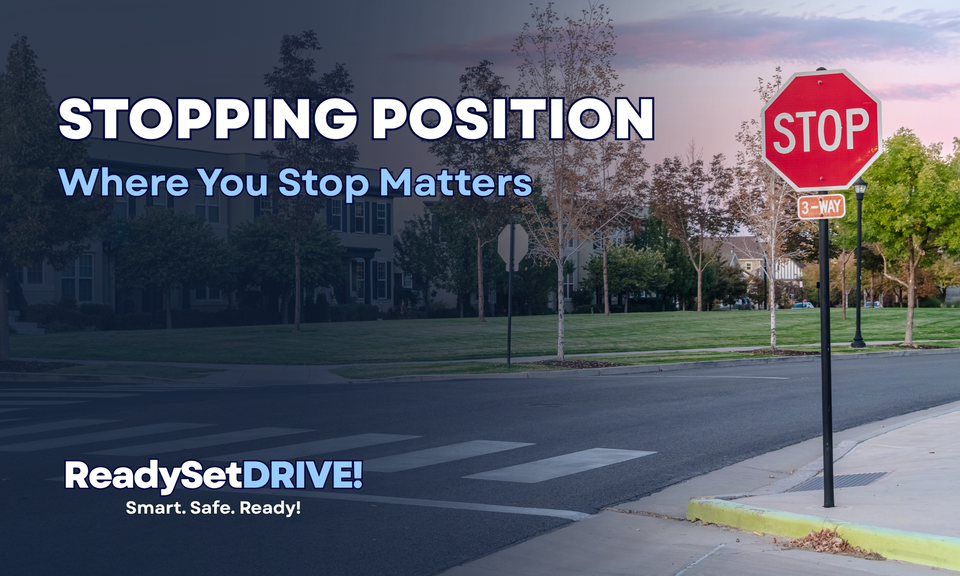
The pedestrian crossing tells you where to stop. If there isn't one, stop before the end of the road.
That's the part many new drivers miss.
Most students stop where it's easiest to see cross traffic. Unfortunately, that often puts them in the pedestrian crossing.
We protect people first. Then we position ourselves to safely see cross traffic.
Stopping in the correct position isn't just about following the rules. It protects pedestrians, keeps you safe, and makes your actions more predictable to everyone around you.
Predictable drivers help keep everyone safe. When other drivers, pedestrians, and bicyclists know what you're going to do, everyone has more time to react and make good decisions.
Once you know where to stop, you'll stop in the right place every time. It's a simple habit that makes you a safer, more predictable driver.
The Pedestrian Crossing Tells You Where to Stop
The next time you approach a stop sign or red light, ask yourself one question:
Where is the pedestrian crossing?
Once you know the answer, you'll know exactly where to stop.
There are three possible situations:
- Marked pedestrian crossing (crosswalk): Stop before the crosswalk.
- Unmarked pedestrian crossing (no crosswalk): Stop before the point where people would cross between the two sidewalks, even though there are no painted lines.
- No pedestrian crossing: Stop before the end of the road.
That's it.
Most students think they have to memorize a bunch of different rules. They don't.
Instead, look for the pedestrian crossing first. Once you know where it is, you'll know where your vehicle belongs.
Many times, when you stop behind the pedestrian crossing, you won't be able to see cross traffic well enough to make a safe decision. That's normal.
Stop in the correct position first. Once you know there are no people crossing, slowly move forward until you can safely see cross traffic.
People first. Traffic second.
Marked Pedestrian Crossings (Crosswalks)
A marked pedestrian crossing, or crosswalk, is the easiest one to recognize because it's painted right on the road.
Sometimes you'll also see a white stop line painted on the road. When it's there, your job is even easier.
Stop behind the white line.
If there isn't a white stop line, stop before the crosswalk.
It doesn't matter if no one is crossing. The crosswalk is there to provide a safe place for people to cross, and your vehicle should never block it.
Many students stop on the crosswalk because they're trying to get a better view of traffic. That's understandable, but it's the wrong order.
People come first. Traffic comes second.
Many times, when you stop behind the crosswalk, you won't be able to see cross traffic well enough to make a safe decision. That's normal.
Come to a complete stop first. Once you know there are no people crossing, slowly move forward until you can safely see cross traffic.
People first. Traffic second.
Continue Reading: Why Looking Farther Ahead Makes You a Better Driver
https://blog.readysetdrivemn.com/lookingahead
Unmarked Pedestrian Crossings (No Crosswalk)
Here's something many students don't realize.
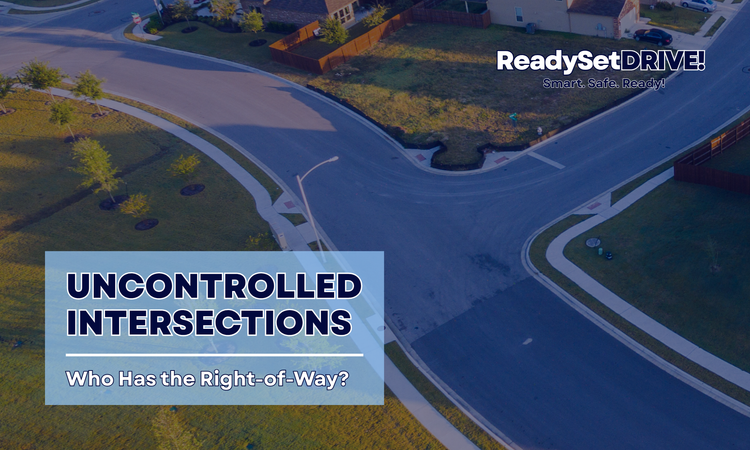
Just because there isn't a painted crosswalk doesn't mean there isn't a pedestrian crossing.
If the sidewalks line up across the intersection, people can still cross there—even without painted lines.
That's an unmarked pedestrian crossing.
When you come to a stop sign or red light, stop before the point where someone would cross between the two sidewalks.
Many students drive all the way to the end of the road because they don't see a painted crosswalk. That's a common mistake.
The paint doesn't create the pedestrian crossing. It simply makes it easier to see.
Leave that space open so people can cross safely.
Many times, when you stop behind the unmarked pedestrian crossing, you won't be able to see cross traffic well enough to make a safe decision. That's normal.
Come to a complete stop first. Once you know there are no people crossing, slowly move forward until you can safely see cross traffic. Some intersections only require you to move forward a little, while others may require you to move much farther.
Move up as much as you need to safely see before making your decision.
People first. Traffic second.
No Pedestrian Crossing
This is the least common situation, but it does happen.
If there aren't two sidewalks across from each other, there isn't a pedestrian crossing to protect.
In that case, stop before the end of the road.
This gives you the best position to check for traffic and decide when it's safe to proceed.
If you can't see cross traffic well enough, that's normal.
Come to a complete stop first. Then, if needed, slowly move forward until you can safely see cross traffic before making your decision.
Move forward as much as you need to safely see before making your decision.
People first. Traffic second.
The Simple Rule to Remember
You don't have to memorize a bunch of different stopping rules.
Just remember this:
- Look for the pedestrian crossing first.
- If there's a pedestrian crossing, stop before it.
- If there isn't a pedestrian crossing, stop before the end of the road.
- If you can't see cross traffic, come to a complete stop first. Then move forward until you can safely see.
Follow that same process at every intersection, and you'll know where to stop every time.
People first. Traffic second.