How Parents Can Help Teens Get the Most Out of Behind-the-Wheel Lessons
For many parents, helping a teen learn to drive can feel overwhelming. Between busy family schedules, supervised driving requirements, behind-the-wheel lessons, and preparing for the road test, it's not always clear how everything fits together.
Many families naturally assume that the required behind-the-wheel lessons are where students become confident drivers. While those lessons are an essential part of learning to drive, they're only the beginning. The greatest growth happens between lessons, when students continue practicing with a parent or other experienced driver.
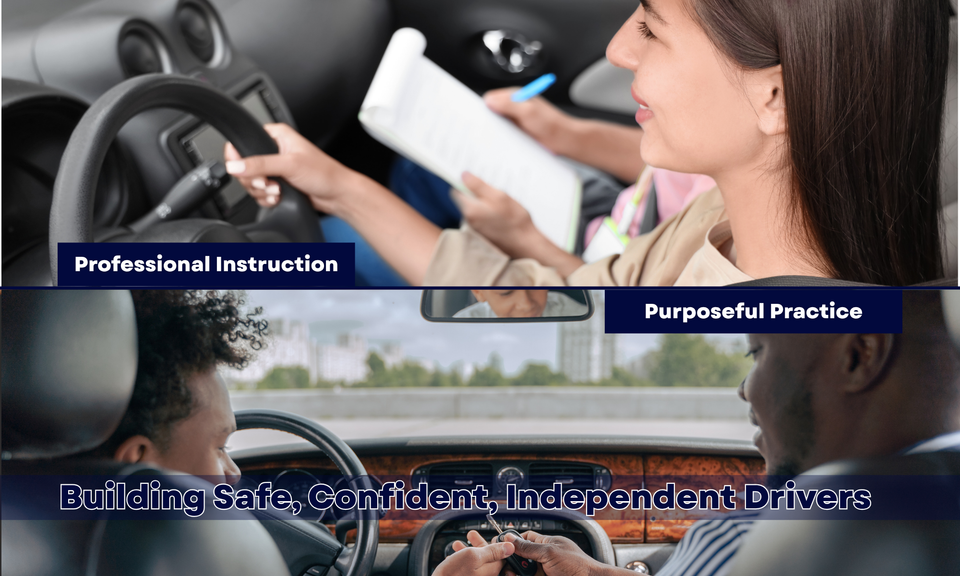
At ReadySetDrive!, we believe professional instruction provides the foundation. Supervised practice builds confidence. Together, they create safe, confident, independent drivers.
Parents play an important role in that process—not by replacing professional instruction, but by providing regular opportunities for their teen to practice, gain experience, and reinforce the skills learned during behind-the-wheel lessons. Every drive becomes another opportunity to build confidence, reinforce safe habits, and prepare for the next drive.
When families understand how professional instruction and supervised practice work together, every drive becomes an opportunity to build the skills, confidence, and experience needed to become a safe, independent driver.
Start Behind-the-Wheel at the Right Time
One of the most common questions parents ask is, "When should my teen begin behind-the-wheel lessons?"
At ReadySetDrive!, we generally recommend scheduling the first lesson after a student has approximately 10 hours of supervised driving experience. This isn't a requirement or a magic number—some students are ready sooner, while others benefit from additional practice before their first lesson. The goal is simply to give students enough supervised driving experience to become familiar with steering, braking, accelerating, turning, and the basic operation of the vehicle before professional instruction begins.
Beginning behind-the-wheel instruction around the 10-hour mark also allows students to learn proper driving techniques early in the learning process. At ReadySetDrive!, we often tell families, "The best time to correct a bad habit is before it becomes a habit."
Rather than spending weeks or months reinforcing incorrect techniques, students receive professional coaching while their driving habits are still developing. This allows students to begin reinforcing proper techniques through supervised practice, giving them more time to build safe driving habits before taking their road test.
It also gives each behind-the-wheel lesson an opportunity to build on the previous one while students continue practicing those skills between lessons. By the time students are preparing for their road test, the focus should be on refining confidence and decision-making—not trying to break habits that have been reinforced over dozens of hours of driving.
Every student develops at a different pace, and there isn't a perfect time to begin behind-the-wheel instruction. The goal is to start when students have enough basic experience to benefit from professional coaching while still having plenty of time to build confidence and reinforce safe driving habits before taking their road test.
Continue Reading: When Should Teens Start Behind-the-Wheel Lessons in Minnesota?
https://blog.readysetdrivemn.com/when-should-teens-start-behind-the-wheel-lessons-in-minnesota/
Behind-the-Wheel Instruction and Supervised Practice Work Together
Some parents wonder if professional behind-the-wheel instruction is really necessary if they're already spending plenty of time practicing with their teen. The answer is yes—but not because one is more important than the other. Professional behind-the-wheel instruction and supervised practice complement one another because they provide different learning experiences, each playing an important role in helping students become safe, confident, and independent drivers.
When students practice with a parent or supervising driver, they're often driving in familiar areas—going to school, work, practice, the grocery store, or running other everyday errands. Because students already know where they're going, they can focus more of their attention on developing safe driving skills rather than worrying about navigating unfamiliar roads.
That's one of the reasons supervised practice and professional instruction work so well together. Each provides students with a different type of learning experience that helps them continue growing as drivers.
Behind-the-wheel lessons have a different purpose. As students become ready, we gradually introduce new driving environments and experiences that help move their skills forward. Depending on the student's progress, that may include driving on highways, freeways, and interstates, navigating one-way streets, handling heavier traffic, interacting safely with pedestrians, bicyclists, and motorcyclists, managing more complex intersections, driving at higher speeds, and learning how to merge and change lanes confidently.
Every lesson is designed to move students' skills forward by building on what they already know and introducing new experiences they're ready to handle. The goal isn't to overwhelm students. Every new experience is introduced when the student's skills are ready for the challenge. By gradually expanding their comfort zone in a safe, supervised environment, students develop the confidence and experience they'll need to drive independently after earning their license.
Learning to drive is no different than learning any other skill. Whether it's academics, music, theater, athletics, or driving, growth happens through practice.
The learning process is remarkably similar. We introduce something new, explain why it's important, walk through the steps, practice it, make mistakes, adjust, and try again. That's how people learn.
One of the first things I tell students is that their job isn't to be perfect during a behind-the-wheel lesson. In fact, I expect them to make mistakes. Every mistake is an opportunity to learn. We'll talk about what happened, why it happened, and how to handle the situation differently the next time.
The reality is, most people don't like making mistakes. That's understandable, but mistakes are often where the greatest learning takes place. The key is making those mistakes in a safe, supervised environment where a licensed teacher or supervising driver can provide guidance, coaching, and, when necessary, intervene before a mistake becomes an accident.
Supervised practice has a different, but equally important, role. Driving with a parent or supervising driver gives students the opportunity to reinforce what they learned during their behind-the-wheel lessons. Through repetition and experience, students build confidence, develop consistency, and continue strengthening the safe driving habits introduced during professional instruction.
Neither professional instruction nor supervised practice is intended to replace the other. Professional instruction provides the foundation. Supervised practice builds confidence. Together, they create safe, confident, independent drivers.
Families can help maximize every behind-the-wheel lesson by encouraging students to practice the skills covered during each lesson before the next drive. Reviewing lesson summaries, videos, and other resources in the ReadySetDrive! Student Portal can also help reinforce those concepts and keep students progressing between lessons.
Continue Reading: Why One-on-One Behind-the-Wheel Lessons Help Minnesota Teens Become Safer Drivers
https://blog.readysetdrivemn.com/why-one-on-one-behind-the-wheel-lessons-help-minnesota-teens/
Everyday Drives Build Great Drivers
Life is busy, especially for families with teenagers. Between school, homework, after-school activities, jobs, music lessons, theater, sports, volunteer commitments, and everything else families have going on, setting aside an hour or two just for driving practice isn't realistic.
The good news is that it usually isn't necessary.
Most students don't complete their supervised driving hours through long practice sessions. Instead, they build experience one everyday drive at a time. A quick trip to school, work, practice, the grocery store, or another routine errand may only take 5, 10, or 15 minutes, but those everyday drives are how most students build their 50 hours of supervised driving experience.
Whenever you can, stop letting your teen ride as the passenger and put them in the driver's seat instead. Don't give them the option. Those everyday drives to familiar places are often where students make the greatest progress.
When students already know where they're going, they can focus less on where to go and more on how they're driving. Instead of worrying about directions or navigating unfamiliar roads, they can devote more attention to developing their driving skills, making good decisions, and becoming more consistent behind the wheel. That's where families often see the greatest growth.
Every drive is another opportunity to build confidence, reinforce safe habits, and prepare for the next drive.
If your teen isn't driving, don't let the trip go to waste. Put the cell phone away and encourage them to pay attention to what's happening on the road. As you drive, point out things that should get their Spidey senses going—pedestrians near a crosswalk, a vehicle backing out of a parking space, brake lights several cars ahead, a driver who may not see you, or changing traffic conditions. Explain what you're seeing, why it caught your attention, and how you're responding.
For example, when you see children playing near the road, most of the time they'll stay right where they are. But experienced drivers understand that the situation could change at any moment. The moment they see those children, their brain starts connecting the dots. If a ball rolls into the street, if a child starts running, or if someone suddenly changes direction, they're already better prepared to respond because they recognized the situation early.
That's why it's so important to talk through what you're seeing as you drive. Parents help their teen understand what should get their Spidey senses going and explain why. The goal isn't to expect something bad to happen. It's to teach students to recognize situations that deserve a little extra attention before they become a big problem. The sooner they learn to recognize those situations, the more time they'll have to make good decisions if something unexpected does happen.
Use every drive to build on what your teen learned during their behind-the-wheel lessons. Keep practicing those skills between lessons, not just during them. If you're looking for ideas on what to practice next, the ReadySetDrive! Student Portal is a great place to start. Lesson summaries, instructional videos, parking guides, and other resources can help you and your teen review what was covered and make the most of your next drive together.
Learn More: Why Choose ReadySetDrive!?
https://www.readysetdrivemn.com/why-choose-us.html
Stop Being a Passenger and Start Being the Driver
One of the things I tell students all the time is to stop being a passenger and start being the driver. I also remind them to stop thinking their parents have an extra hour or two to take them out just to practice driving. Parents are busy working, raising a family, helping with homework, and getting everyone where they need to be.
Instead, take advantage of the drives you're already making. Every time your family heads to school, work, activities, the grocery store, or another everyday destination, get in the driver's seat. Those 5-, 10-, and 15-minute drives may not seem like much, but they add up quickly. Before long, you've built meaningful driving experience and made real progress toward your required 50 hours—all while developing the confidence and skills you'll use every time you drive.
One of the biggest advantages of driving in familiar areas is that students can spend less time figuring out where they're going and more time focusing on how they're driving. Once they know the route, they can start developing the habits that make experienced drivers so good behind the wheel—pushing their eyes farther down the road, taking in more information, preparing for their next move, and anticipating what they'll need to do next.
Driving familiar routes also helps students become more consistent with the basics. They can focus on maintaining a steady speed, braking and accelerating more smoothly, and carrying the right speed into and out of turns. Because they're familiar with the area, they also begin recognizing places where pedestrians, bicyclists, school buses, or heavier traffic are more common. Over time, they begin anticipating not only what others might do, but also what they'll need to do themselves to drive smoothly, safely, and confidently.
It also helps to be honest with yourself about the things that still make you nervous or don't feel comfortable yet. Maybe it's changing lanes, driving on the freeway, parallel parking, busy intersections, or something else. Talk about those things with your parent or your instructor. Discuss what adjustments you can make, then make a point to focus on those skills during your everyday drives.
Remember, we only move the needle a little bit at a time. Don't try to improve everything during every drive. Focus on one skill, work on it until it starts to feel comfortable, then move on to the next one.
One of the biggest challenges for new drivers is that almost everything they do requires forced thought. They have to think about how much to turn the wheel, when to brake, when to accelerate, when to use their turn signal, how fast to take a corner, and a hundred other little decisions. By the end of a drive, it's no surprise their brain feels tired.
Experienced drivers make it look easy because many of those basic skills have become instinctual. They aren't thinking about the mechanics of driving anymore. Instead, they can focus on what's happening down the road, preparing for their next move, connecting the dots, and anticipating what they'll need to do next.
At the end of every lesson, I want students to know they did a great job. They're so focused on the mistakes they made that they don't see how much they improved. I remind them that every drive, every experience, and yes, even every mistake made them a better driver. Before they leave, we talk about what went well, what improved, and what they should continue working on during their next few drives.
As one skill becomes instinctual, you're able to spend less time thinking about the mechanics of driving and more time focusing on what's happening down the road. That's how we improve. One skill builds on another until driving becomes smoother, more comfortable, and much less stressful.
Learn More: Why Choose ReadySetDrive!?
https://www.readysetdrivemn.com/why-choose-us.html
Conclusion
Learning to drive isn't about becoming perfect. It's about making progress, one lesson, one skill, and one drive at a time.
Professional instruction provides the foundation. Supervised practice builds confidence. Together they create safe, confident, independent drivers.
As a parent, you don't have to have all the answers. Your job isn't to teach everything—it's to provide opportunities, have conversations, encourage good habits, and keep your teen in the driver's seat. Those everyday drives, conversations, and experiences make a bigger difference than most families realize.
Every drive is another opportunity to build confidence, reinforce safe habits, and prepare for the next drive.
My goal isn't for students to leave thinking they're perfect drivers. My goal is much simpler than that.
I want them to get out of the car after their last lesson and think,
"I can do this."