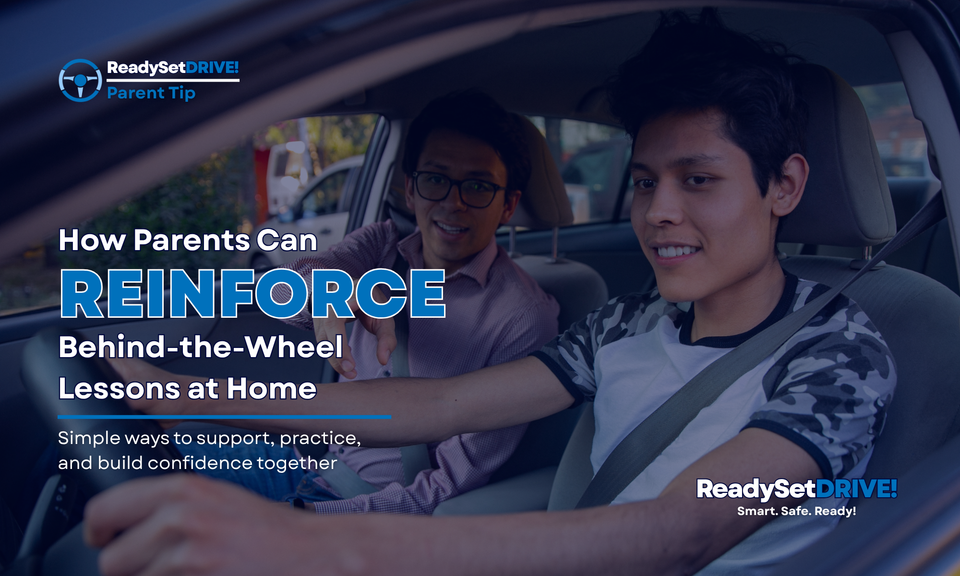
How Parents Can Reinforce Behind-the-Wheel Lessons at Home
Behind-the-wheel lessons are only a small part of learning to drive.
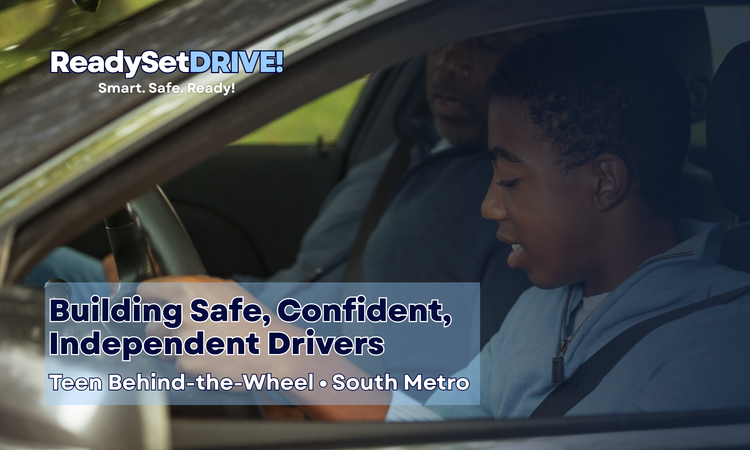
Your teen will spend six hours behind the wheel with ReadySetDrive! The rest of their driving experience happens with you.
That's why parents play such an important role in the learning process.
One of the questions we hear most often is:
"What should we be doing between lessons?"
Our answer is simple.
Keep them driving.
Parents bring tremendous value to the learning process because they're experienced drivers. You know what everyday driving looks like. You understand traffic, weather, busy parking lots, school zones, and all the little situations that come up every time you get behind the wheel.
Our job is to teach students the skills they need to become safe drivers, but just as importantly, we want them to understand why those skills matter.
Learning how improves driving performance.
Understanding why helps students recognize and avoid potential risk.
When students understand the reason behind a driving habit, they're much more likely to make good decisions—not just during a driving lesson, but every time they get behind the wheel.
Your job is to keep your teen moving forward.
Ask your teen about what we worked on during their last lesson. Talk about why those skills are important. Practice those same skills during your everyday drives, and give your teen opportunities to apply what they're learning in real-world situations.
When professional instruction and supervised practice work together, students gain the experience they need to become safe, confident, and independent drivers.
Start with the Last Lesson
One of the easiest ways to make practice drives more productive is to build on what your teen learned during their last behind-the-wheel lesson.
Before you leave the driveway, spend a minute talking about the last lesson.
Teenagers don't always volunteer a lot of information, so asking a few simple questions can help start the conversation while giving them some control over where it goes.
Try questions like:
- Did you learn anything new?
- Did you learn anything different?
- Was anything challenging for you?
- Is there anything you want to focus on today?
Those questions help your teen reflect on the lesson while giving you a better understanding of what stood out to them.
From there, choose one or two skills to focus on during your drive.
Don't try to work on everything.
If your teen talks about looking farther ahead, reinforce that during your drive. If they mention stopping position, make that your focus. If they want more practice with turning, lane position, or another skill, give them extra opportunities to practice.
Continue Reading: Why Looking Farther Ahead Makes You a Better Driver
https://blog.readysetdrivemn.com/lookingahead
Learning to drive isn't about improving everything during every drive. It's about making steady progress, one skill at a time.
Ask Questions That Help Your Teen Think
One of the best ways to help your teen become a better driver is to ask questions instead of immediately giving the answer.
As experienced drivers, it's easy for us to recognize what's happening around us. We know when a traffic light has been green for a long time, when a driver might pull out in front of us, or when it's time to start slowing down for a stop.
New drivers are still learning to recognize those situations.
Instead of pointing out everything your teen should do, ask questions that help them notice what's happening and think through the situation for themselves.
For example, you might ask:
- What do you see ahead?
- Where should we stop?
- Is this a wide turn or a tight turn?
- Which lane do we need to be in?
The goal isn't to quiz your teen or see if they know the right answer. The goal is to help them think through the situation before they get there. The more they practice thinking ahead, the more naturally good driving decisions begin to happen.
At first, you'll ask the questions. Before long, your teen will begin asking themselves those same questions. That's when they'll start thinking about what they see ahead instead of simply reacting to what's right in front of them.
A few extra seconds to observe, think, and respond can make a big difference. Those moments help your teen build the confidence to make good driving decisions on their own.
Use the Student Portal to Reinforce Learning
One of the reasons we created the Student Portal is because we know students aren't going to remember everything they learn during a behind-the-wheel lesson.
During each lesson, students learn new driving skills, but they also learn why those skills matter. Understanding why we do things a certain way helps students recognize potential risks and make better driving decisions.
That's a lot to remember during a two-hour lesson.
The Student Portal gives students the opportunity to go back and review those concepts anytime they need a refresher.
If they learned about SMOG during a lesson, it's there.
Continue Reading: SMOG: A Simple Habit That Helps New Drivers Make Safer Moves
https://blog.readysetdrivemn.com/smog
If they want to review stopping position, looking farther ahead, parking, yellow lights, left turns, right-of-way, or another driving skill, it's there.
We don't expect students to remember everything they learn during a two-hour lesson, and that's okay. That's why the Student Portal is there. It gives students the opportunity to go back, review concepts, and continue learning at their own pace.
One of our goals in creating the Student Portal was to give students a place where they could come back and review what they learned—not just between lessons, but while preparing for the Minnesota road test and even after earning their driver's license.
The Student Portal continues to grow because of the students we work with. Every lesson teaches us something. If we notice students asking the same questions or struggling with the same concept, we create a new resource and add it to the portal. In many ways, our students help shape the resources that future students will use.
Learning to drive is a process. The more opportunities students have to review, practice, and reinforce what they've learned, the more confident and prepared they'll become behind the wheel.
Keep Practice Simple and Consistent
One of the most important things to remember about supervised driving is that not every drive has to be a special event. Some of the best practice happens during everyday trips.
Heading to school? Let your teen drive.
Running to the grocery store? Put them behind the wheel.
Going to practice, work, appointments, or a family gathering? Those are all great opportunities to gain experience.
One of the best things about everyday drives is that they're real.
Your teen is driving where they'll actually be driving after they earn their driver's license. They're learning how to handle different traffic, different weather, different times of day, and different situations. That's how experience is built, and that's how confidence grows.
You don't have to work on everything during every drive.
Instead, pick one skill from your teen's last behind-the-wheel lesson and continue working on it.
Maybe today's drive is about looking farther ahead.
Tomorrow, it might be smoother stops.
The next drive might focus on making better turns or recognizing where to stop at intersections.
Continue Reading: Stopping Position: Where You Stop Matters
https://blog.readysetdrivemn.com/stop
As that skill becomes more comfortable, choose another one to work on.
Every drive is another opportunity to build confidence, reinforce safe habits, and prepare for the next drive.
The goal isn't to make every drive perfect.
The goal is to keep your teen driving.
Keep Moving Forward
Learning to drive doesn't happen in just six hours behind the wheel.
It happens one drive at a time.
Every drive is another opportunity to build confidence, reinforce safe habits, and prepare for the next drive.
Keep it simple. Build on what your teen learned during their last lesson and continue giving them opportunities to practice.
Talk about the last lesson.
Ask questions that help your teen think.
Use the Student Portal when your teen wants to review a concept.
Most importantly, keep putting your teen behind the wheel.
Professional instruction and supervised practice are designed to work together. Behind-the-wheel lessons introduce new skills and explain why those skills matter. Supervised practice gives students the opportunity to apply those skills, build experience, and continue growing as drivers.
Learning to drive is a process, and every drive is another opportunity to move forward.
Professional instruction provides the foundation. Supervised practice builds confidence. Together they create safe, confident, independent drivers.